Informatics for Social Empowerment and Transformation
Abstract
Knowledge, and by implication informatics, is power. It is the most effective tool for democratization, social inclusion and economic progress. How does informatics foster all these vital elements? It is by lending support to the State in extending education, training and other developmental services to those people who have been left out of the security umbrella. Providing equality of opportunity is very vital since that alone will help them transcend the barriers of race, gender and economic status. Social backwardness is a complex phenomenon, causes of which are hard to seek. Poverty, of course, is the most important determinant. But economic poverty goes hand in hand with information poverty. Lack of access to information makes people incapable of adopting new technologies and renders them powerless in innovating solutions. Upward social mobility and resultant self-respect are so crucial in ensuring social justice. Informatics is the single most important tool to achieve it.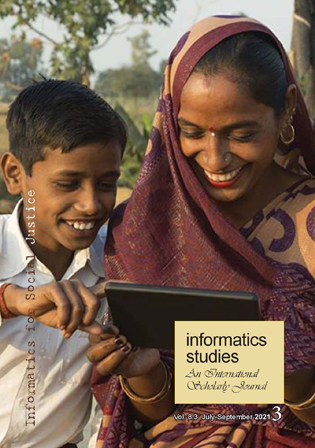
Downloads
Published
Issue
Section
License
Submission of a manuscript to IS indicates that the work is original, has not been previously published (except as an abstract, lecture, or thesis), and is not under consideration by another journal. By submitting, authors affirm that their manuscript meets the journal’s ethical and editorial standards and that they agree to the terms of copyright and licensing upon acceptance.
Once accepted for publication, authors grant IS the first publication rights to the work. However, authors retain full copyright of their content and remain the legal owners of their intellectual property.
IS provides open access to all published articles six months after the release of the respective volume. Once the embargo period concludes, articles are made freely available under the Creative Commons Attribution (CC BY) License (https://creativecommons.org/licenses/by/4.0/). This license allows users to share, adapt, and reuse the work in any medium or format provided that appropriate credit is given to the original authors and the initial publication in this journal.
The journal's delayed open access model supports global knowledge dissemination, ensuring that research is accessible without financial or legal barriers. Authors are also encouraged to archive their published articles in institutional repositories, personal websites, or other platforms, with full citation of the journal version. Pre-print versions posted online should include a citation and link to the final published version in IS as soon as the issue is available; post-print versions (including the final publisher's PDF) should include a citation and link to the journal's website.
All materials published in the IS website are distributed under a Creative Commons Attribution license, unless otherwise noted.