Acculturation and Artificial intelligence in the form of Digital Technologies among farmers
Keywords:
Agriculture, Artificial Intelligence, Digital Technology, Acculturation, Precision Agriculture, Agritech IndustryAbstract
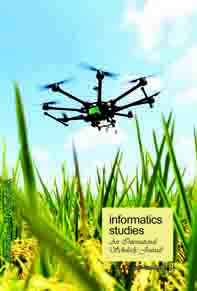
Agriculture sector need information for enhancing crop production in India. The sector apply various modern tools that include Artificial Intelligence driven sensors such as remote sensors, high precision positioning system, automated steering system, geo mapping, integrated electronic communication, variable rate technology etc influencing farming operations from sowing till promotion of produce. Synergy between information technology and agricultural science also help in improved economic and environmentally sustainable crop production through adoption and acculturation of new seed and non-seed technologies, diversifying cropping pattern, better market connectivity etc. The paper reviews the developments in this field and concludes that acculturation of digital technology will play a significant role in the dynamics of the farming sector and will bring novel tasks to farmers.
References
Kite-Powell, J. 2016. Take a look at how technology makes smart and sustainable farming. https://www.forbes.com/sites/jenniferhicks/2016/12/31/take-a-look-at-how-technology makes-smart-and-sustainble-farming/#15eeda613deb.
Haryana, Govt of. Report on Haryana State Agriculture Policy. http://www.haryanakisanayog.org/ Reports/Report_on_Haryana_State_Agriculture_ Policy _ Draft.pdf#zoom=100%
Seth, A. and Ganguly, K . 2017. Digital technologies transforming Indian agriculture: 105-111. https://www.wipo.int/edocs/pubdocs/en/wipo_pub_gii_2017-chapter5.pdf.
About Authors
Manisha Ohlan, is pursuing research at Department of Extension Education and Communication Management, I.C. College of Home Sciences, CCS Haryana Agricultural University, Hisar, Haryana, India. e-mail: [email protected]
Dr. Manju Dahiya, is Principal Scientist, Department of Extension Education and Communication Management, I.C. College of Home Sciences, CCS Haryana Agricultural University, Hisar, Haryana. She has published numerous papers, reports and books and course materials on extension education.
Downloads
Published
Issue
Section
License
Submission of a manuscript to IS indicates that the work is original, has not been previously published (except as an abstract, lecture, or thesis), and is not under consideration by another journal. By submitting, authors affirm that their manuscript meets the journal’s ethical and editorial standards and that they agree to the terms of copyright and licensing upon acceptance.
Once accepted for publication, authors grant IS the first publication rights to the work. However, authors retain full copyright of their content and remain the legal owners of their intellectual property.
IS provides open access to all published articles six months after the release of the respective volume. Once the embargo period concludes, articles are made freely available under the Creative Commons Attribution (CC BY) License (https://creativecommons.org/licenses/by/4.0/). This license allows users to share, adapt, and reuse the work in any medium or format provided that appropriate credit is given to the original authors and the initial publication in this journal.
The journal's delayed open access model supports global knowledge dissemination, ensuring that research is accessible without financial or legal barriers. Authors are also encouraged to archive their published articles in institutional repositories, personal websites, or other platforms, with full citation of the journal version. Pre-print versions posted online should include a citation and link to the final published version in IS as soon as the issue is available; post-print versions (including the final publisher's PDF) should include a citation and link to the journal's website.
All materials published in the IS website are distributed under a Creative Commons Attribution license, unless otherwise noted.